
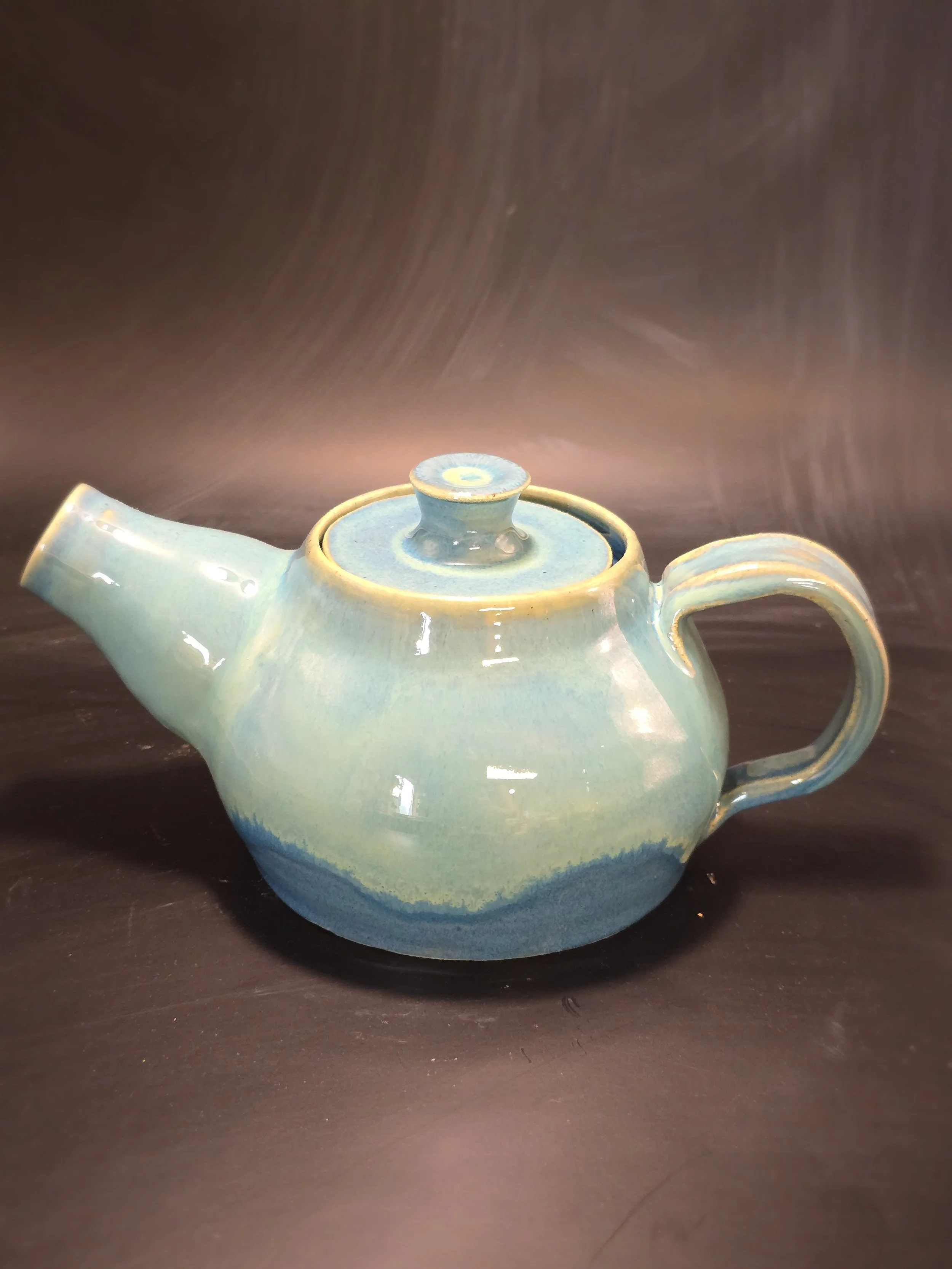
The life of a piece: Why handcrafted matters.
When you hold a piece of Likalu pottery, you aren’t just holding a bowl or a mug. You are holding weeks of intentional labor, decades of culinary experience, and a slice of Southern Oregon grit.
Why do handmade pieces cost more than one from a big-box store? The answer lies in the “Service” behind the stoneware.
One single piece, a mug, a bowl, a plate, or custom items take over three weeks to complete. Every piece is hand-thrown, requiring focus and physical strength.
The Prep: Deciding what to create, drawing up the design, purchasing clay, weighing it out and then wedging to prepare for the wheel or hand building.
Turning the clay into a useable piece of art: Using the wheel or hand building this is a timely process working the clay into the design you have envisioned.
The drying: Clay cannot be rushed. It must dry slowly in the Oregon air to prevent cracking. Depending on the weather, this could take up to a week or more.
The Double Fire: Every piece enters the kiln twice. These firings reach up to 2,300°F and can take up to 48 hours each to heat up and cool down safely.
The “fail rate”: of the artist unlike a factory, I am human. A sudden change in humidity or a tiny bubble in the kiln can ruin weeks’ worth of work. Pottery is an unpredictable art. Even after weeks of work, a piece can crack, warp, or "bloat" during the final firing.
Specialized Equipment: A professional kiln and pottery wheel are multi-thousand-dollar investments.
Extreme Energy: Firing a kiln requires a massive amount of electricity or gas to reach those "molten stone" temperatures.
Premium Materials: From ethically sourced clays to custom-mixed, food-safe glazes, the raw materials are a significant part of the cost.
The Survival Rate: Not every piece that enters the kiln comes out perfect.
The Cost of Failure: When you buy a finished piece, you are supporting the artist's ability to absorb the cost of the items that didn't make it through the fire.
Chemistry: Understanding how glazes interact with clay bodies is a science.
Artistry: Each piece is a unique, one-of-a-kind survivor of a difficult process that cannot be replicated by a machine.
The Bottom Line
When you buy handmade, you are choosing quality over quantity. You aren't just paying for the 30 minutes it took to shape that specific bowl; you are paying for the years of trial and error it took to learn how to do it. You are bringing an object into your home that was made with intention, designed to last a lifetime, and crafted by human hands.
Thank you for supporting independent craft and choosing to bring art into your everyday rituals.